
The Monetary Authority of Singapore (MAS) said on 29 October that individuals buying cars registered as private hire cars will be subject to the same motor vehicle financing restrictions as other private car buyers from 30 October 2026. The change ends an exemption that allowed individuals to borrow more, for longer, by registering a car for private hire use. MAS gave one day’s notice and cited a surge of about 500 individual-owned self-drive private hire car registrations a month. In RegMemo’s analysis, the speed of the change shows that MAS treated the exemption as a channel for evading its car loan limits and moved to close it before more buyers used it.
The loan limits that now apply
The restrictions are the ones Singapore has applied to private car loans since 27 May 2016. On that date MAS eased the limits it introduced in February 2013, raising the loan-to-value caps from 60% and 50% to 70% and 60% and the maximum tenure from five years to seven. For a car with an Open Market Value (OMV) of S$20,000 or less, the loan can be at most 70% of the purchase price. For a car with an OMV above S$20,000, the cap is 60%. In both cases the purchase price includes the relevant taxes and the Certificate of Entitlement (COE), and the loan tenure is capped at seven years.
The limits cover loans from financial institutions and from licensed or exempt moneylenders, and they apply whether the financing is a conventional loan, a hire purchase agreement or a conditional sale agreement. They apply to individual-owned private hire cars where the sales agreement is signed on or after 30 October. Where there is no sales agreement, the test date is the date the COE is obtained.
Commercial vehicles stay exempt. MAS lists goods vehicles, buses of several types, engineering plant and taxis in that group. Private hire cars owned by businesses and motorcycles also remain outside the restrictions. A fleet operator that buys cars and rents them to drivers can still borrow on the old terms, and an individual who buys the same model to drive for a ride-hailing platform cannot.
Why MAS moved
The exemption dates from a period when individual-owned private hire cars were treated as vehicles bought for commercial use. MAS said the private hire fleet has since grown and stabilised, and that it has seen more cases of individuals using the exemption with no intent to offer private hire services. The roughly 500 monthly registrations of individual-owned self-drive private hire cars, in MAS’s words, suggest some buyers may be registering “primarily to access more permissive financing terms”.
That is a supervisory finding about borrower behaviour. A car registered for private hire under an individual’s name could be financed with a higher loan and a longer tenure than the same car registered as a private car, and MAS’s account indicates that the registration alone was enough to obtain those terms. MAS also framed the change as a prudence measure for genuine new drivers, who will now borrow on the same terms as other private car buyers.
The option the government rejected
MAS said the government considered other measures, including a separate COE category for private hire and car-leasing companies. It decided against the idea because it would likely raise rentals for private hire drivers and fares for passengers, hurting people who do not own a car or cannot drive, and because it would require more prescriptive rules on private hire drivers and cars.
The choice keeps the policy inside the credit system. A separate COE category would have acted on the supply of cars and the price of entitlements. A loan limit acts on how much a buyer can borrow, and it leaves the COE market and the private hire platforms untouched.
In-house loans are the next gap
The release names the gap that remains. The government will monitor the market and take further steps to apply the same restrictions consistently across financing arrangements, “such as in-house loans”. In-house loans are credit extended directly by car dealers or their related companies, and the wording of the release indicates that they sit outside the financial institutions and licensed moneylenders that the restrictions cover today. MAS also says it will work with platform operators to apply the measures consistently, and it advised car buyers to avoid unregulated financing schemes.
For lenders, the compliance burden is modest. Banks, finance companies and licensed moneylenders already apply the loan-to-value and tenure tests to private car loans, and now need to apply them to individual private hire car buyers on agreements dated from 30 October. Buyers who signed a sales agreement on 29 October or earlier keep the old terms.
Housing loans offer a comparison inside Singapore. MAS sets loan-to-value limits on property loans and applies the Total Debt Servicing Ratio, which caps a borrower’s monthly repayments on all debts, including car loans, at 55% of income when they take a property loan. Bringing private hire car buyers under the car loan limits also lowers the car debt that feeds into that ratio for borrowers who later apply for a mortgage.
What to watch
- Monthly registrations of individual-owned self-drive private hire cars, which MAS put at about 500 a month before the change.
- Any measures on in-house loans by car dealers, which MAS says the government will consider.
- How ride-hailing platforms check that newly registered private hire cars are used for hire, as part of the work MAS says it will do with platform operators.
Primary sources
- Monetary Authority of Singapore, Motor Vehicle Financing Restrictions Extended to Individual-Owned Private Hire Cars, 29 October 2026
- Monetary Authority of Singapore, MAS Eases Rules on Motor Vehicle Financing, 26 May 2016
- Monetary Authority of Singapore, MAS Imposes Financing Restrictions on Motor Vehicle Loans, 25 February 2013
Related: MAS tells banks to limit or exit financing for haze-linked clients that break environmental law
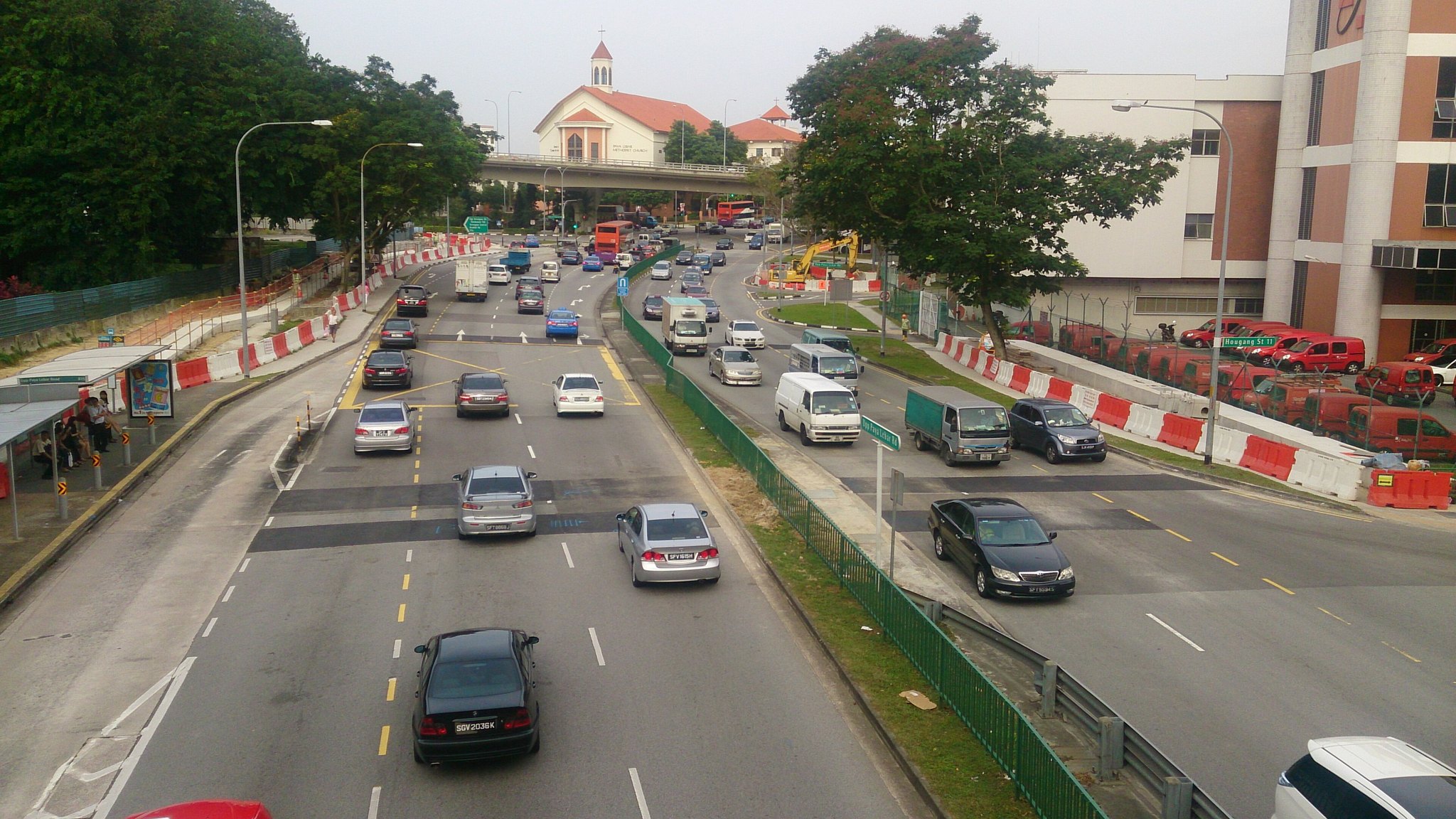
Photo (cropped): ProjectManhattan, CC BY-SA 3.0 via Wikimedia Commons
