
The Australian Securities and Investments Commission (ASIC) on 30 October released CS 69, a consultation on rewriting the financial resources section of Regulatory Guide 172, which covers licensed operators of financial markets. The six-month operating expense floor stays. What changes is what counts toward it: the draft guidance separates liquid assets from loss-absorbing capital, asks significant venues to hold six months of expenses as liquid net assets funded by equity, and tells licensees to treat support from their own group as a second-rank resource. In RegMemo’s analysis, the draft turns the commitment ASX made after ASIC’s inquiry into a written standard for every operator ASIC deems significant.
The ASX inquiry produced the rewrite
ASIC ties the consultation to its Inquiry into ASX. In December 2025, alongside a capital charge, ASX committed to hold enough net tangible assets to meet the financial resource requirements of its market licences by 30 June 2029, and ASIC said at the time that it would review the guidance for all market licensees. The current text, RG 172.68 to RG 172.74, sets high-level principles and a six-month expense benchmark. ASIC now says it has found inconsistencies in how operators apply that text, and says the inquiry also raised the need for clearer guidance on the amount and form of resources.
The draft is confined to Section D of RG 172. It applies to tier 1 and tier 2 licensees, scaled to the nature, size and significance of each operator.
Resilience is foundational to the ongoing growth and competitiveness of our capital markets.
Simone Constant, ASIC Commissioner, 30 October 2026
Cash for the six months, equity as a buffer
Under the draft, the six-month figure must include every expense that supports day-to-day operations, including fees paid under outsourcing and service agreements with related or third parties. Licensees must then test whether six months of historical expenses would cover a recovery or orderly wind-down, where legal, consulting and user support costs may rise. If not, they hold more.
The draft then splits the requirement in two. The amount assessed must be held in liquid assets, which ASIC defines as cash or cash equivalents that can be converted without material delay, realised at or near face value and accessed on demand. Separately, licensees must keep positive net assets at all times, plus a self-determined buffer that keeps net assets positive under severe but plausible scenarios.
The money is meant to sit untouched. A licensee should not use it for ordinary expenses, should replenish it promptly if drawn, and should not pay dividends or take other action that would push its resources below the requirement. A shortfall, or a likely shortfall, should prompt the licensee to consider notifying ASIC under section 792B of the Corporations Act and to restore resources on a timetable agreed with ASIC.
Significant venues face PFMI-style rules
The heaviest obligations fall on operators of significant market venues, which ASIC identifies by retail participation, the lack of alternative venues for the same products, the operator’s role in primary issuance, and size, interconnectedness and substitutability. Those operators must run scenario analysis and stress testing with board oversight of stress loss estimates, and hold, as a minimum, liquid net assets funded by equity equal to six months of operating expenses.
The equity has to absorb losses. Accounting classification alone will not qualify an instrument: ASIC wants permanent, unencumbered capital such as common stock, disclosed reserves and retained earnings, with intangible assets deducted. That language follows Principle 15 of the CPMI-IOSCO Principles for Financial Market Infrastructures, which asks clearing houses, settlement systems and other financial market infrastructures to hold liquid net assets funded by equity of at least six months of current operating expenses. CPMI and IOSCO issued further guidance on that principle on 14 October. ASIC’s draft applies a similar test to trading venues, which the PFMI do not cover, and ASIC says the update brings its guidance closer to that of other domestic and international regulators.
Group money counts last
The section most likely to cause work for listed exchange groups covers intra-group arrangements. A licensee should rely first on resources it holds or generates itself and treat support from related entities as a secondary and less reliable source. Resources needed to meet the obligations of other group entities are excluded. Where the licensee is also the group parent, as ASX Limited is, it should hold resources for its licensed market separately from what it needs as parent.
Tier 1 licensees that depend on group arrangements are expected to document a group capital management policy and plan listing every licensee and critical insourced service provider, licence-level requirements, how resources are allocated across entities and aggregate group-to-licensee sufficiency tests. Directors who also sit on other group boards must manage conflicts over who can release funds. ASIC can impose added requirements for reliance on parent guarantees, material other businesses or changes in operating model, and can set a requirement as a multiple of six months’ expenses.
Annual compliance reports under section 792F would need to show the calculation, the assumptions and the balance sheet items that make up the resources, and licensees would need objective, pre-set triggers for drawing on and restoring them.
What to watch
- 4 December 2026, 5 pm AEDT: submissions close. ASIC is also asking for views on transition arrangements, which the draft does not set.
- Final RG 172 text, and whether ASIC names the venues it treats as significant or leaves the assessment to licensees.
- 30 June 2029: deadline for ASX to hold net tangible assets that meet its market licence requirements under its December 2025 commitment.
- Whether ASIC uses licence conditions, an option the draft keeps open, to make the guidance binding for particular operators.
Primary sources
- Australian Securities and Investments Commission, CS 69 Proposed update to ASIC’s guidance on financial resources requirements for market licensees (RG 172), 30 October 2026
- Australian Securities and Investments Commission, Attachment 1 to CS 69: Draft excerpt from RG 172, October 2026
- Australian Securities and Investments Commission, 26-262MR ASIC consults on financial resources requirements for market operators, 30 October 2026
- CPMI and IOSCO, Final report on FMIs’ management of general business risks and general business losses, 14 October 2026
Related: ASIC halts offers in a A$573m Tasmanian mortgage fund over related-party and fee disclosure
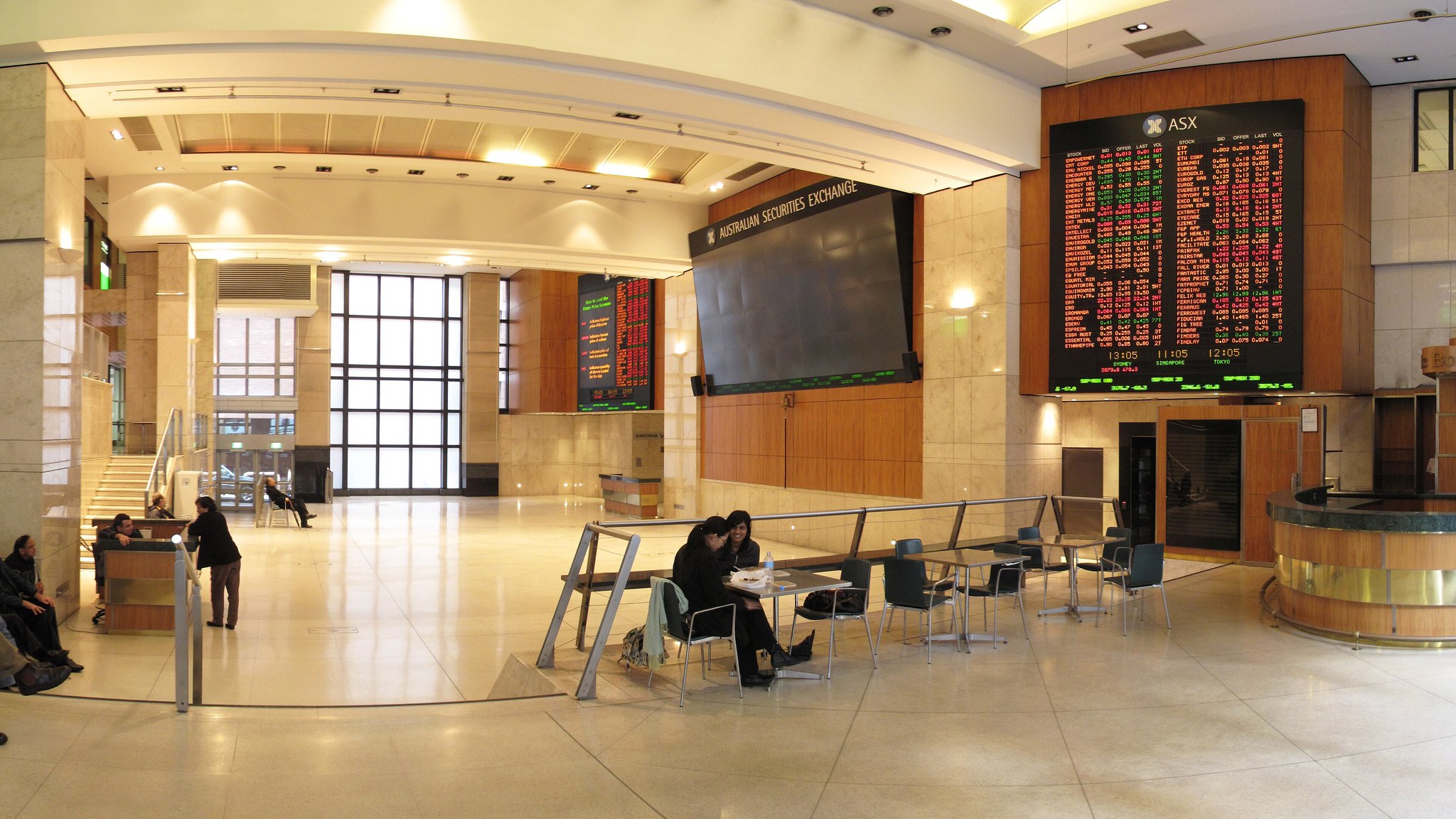
Photo (cropped): Jason7825, Public domain via Wikimedia Commons
