
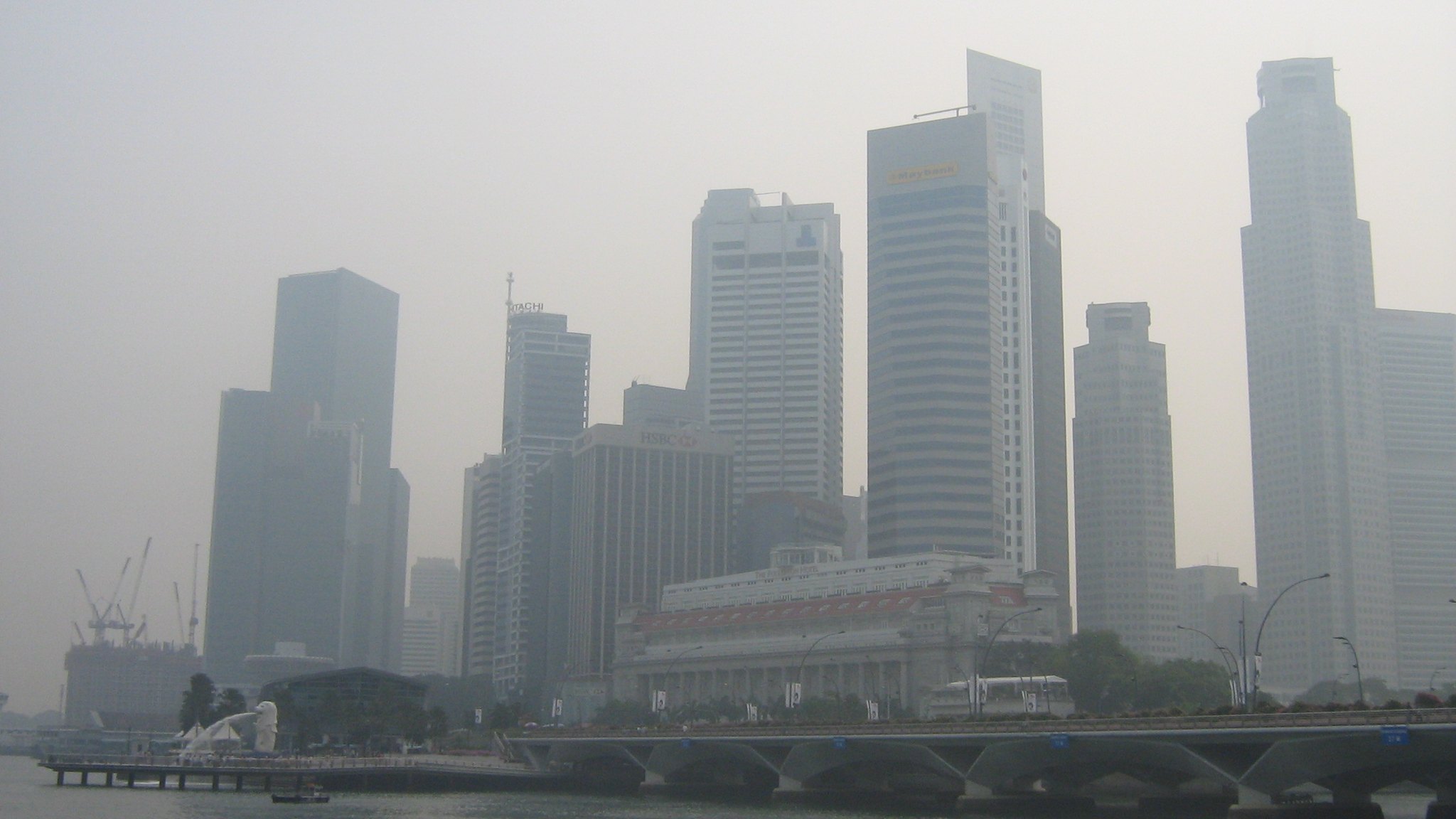
The Monetary Authority of Singapore (MAS) on 28 October issued a statement on banks’ management of haze-related environmental risks that ties bank credit decisions to the National Environment Agency’s (NEA) enforcement of the Transboundary Haze Pollution Act (THPA). Banks are expected to take NEA’s published information into account, question customers that may be linked to fires, and, where a customer is in clear breach of environmental law, limit exposure or end the relationship. In RegMemo’s analysis, the statement adds no new rule and applies the 2020 environmental risk guidelines to named haze cases now, during an active NEA investigation that includes Singapore-registered palm oil and pulp groups.
The statement puts NEA’s notices into credit files
The statement has five paragraphs. The first restates the duty in the 2020 guidelines to identify, assess, manage and monitor material environmental risks, including pollution and deforestation, and adds one new instruction: banks should consider information that NEA releases under the THPA. NEA has been releasing a lot of it this month. On 16 and 19 October it issued preventive measure notices to ten Indonesian companies, requiring them to deploy firefighters, stop burning and submit action plans. On 23 October it served notices on ten Singapore-registered companies with land concessions in Indonesia or related companies that hold them, asking for information on their corporate links, concession locations and fire prevention. NEA said this was the first time it had sent such notices to Singapore-based firms since the THPA came into force.
Those NEA releases name the companies. A bank with an exposure to any of them now has a supervisory expectation to engage the customer, record what it learns about the customer’s role in the fires, and decide whether more action is needed.
Banks get a graded set of responses
MAS sets out an escalation path. Where customers may be linked to haze, banks should engage them and obtain enough information to understand their role, including whether they have measures to prevent, detect and stop fires. Where a bank finds heightened environmental risk, it may impose conditions, review financing terms, limit further exposure or reassess the relationship. Clear breaches of environmental laws “would warrant stronger measures”, which MAS defines as limiting exposures or exiting.
Most of the statement leaves the decision to bank judgement. The final step does not: once a breach is established, MAS has told banks what it expects to see, and an examiner reviewing a bank’s file on a palm oil borrower will check whether the bank followed that path. The THPA allows Singapore to act against entities that cause or contribute to haze in Singapore even when the fires are outside the country, so an NEA finding against a Singapore-registered group would land directly on the files of the banks that lend to it.
The statement also says MAS supports “the local banks’ clear stance against burning practices” and notes that they will take strong action where warranted. The local banks are DBS, OCBC and UOB. Foreign bank branches in Singapore are covered by the same 2020 guidelines and so by the same expectation.
The March transition planning rules point the other way on exits
MAS links the statement to its Guidelines on Transition Planning, issued on 5 March 2026 as an addendum to the 2020 guidelines and taking effect in September 2027. Those guidelines ask banks to engage customers on climate risk “so as to avoid the indiscriminate withdrawal of credit”. The haze statement keeps engagement as the first step, but it also names exit as the expected response to a clear legal breach. Together, the two documents give banks a rule of thumb: stay and engage where a customer is managing transition or fire risk, and reduce exposure where the customer has broken the law.
For borrowers, the practical effect comes through loan terms. Conditions on fire prevention, information covenants tied to NEA requests and review clauses triggered by enforcement action are the tools MAS lists, and banks can add them at the next renewal without waiting for a court finding.
Gaps the statement leaves open
The statement does not define “clear breach”. It does not say whether a preventive measure notice, an information request, a fine under the THPA or a conviction in Indonesia would meet that test. It also says nothing about insurers or asset managers, which have their own versions of the 2020 guidelines, although the same logic would apply to insurance cover and equity holdings in the companies NEA has named.
What to watch
- NEA’s next steps under the THPA against the ten Indonesian and ten Singapore-registered companies, including any findings of liability.
- Whether MAS issues similar statements to insurers and asset managers under their environmental risk guidelines.
- Changes to loan terms or exposure disclosures by Singapore banks lending to plantation and pulp groups.
- September 2027: the Guidelines on Transition Planning take effect for banks, insurers and asset managers.
Primary sources
- Monetary Authority of Singapore, Statement on Banks’ Management of Haze-Related Environmental Risks, 28 October 2026
- Monetary Authority of Singapore, Guidelines on Environmental Risk Management for Banks, December 2020, with the transition planning addendum of March 2026
- Monetary Authority of Singapore, MAS Sets Supervisory Expectations on Financial Institutions for Transition Planning Practices, 5 March 2026
Photo (cropped): SpLoT, CC BY 2.5 via Wikimedia Commons
