
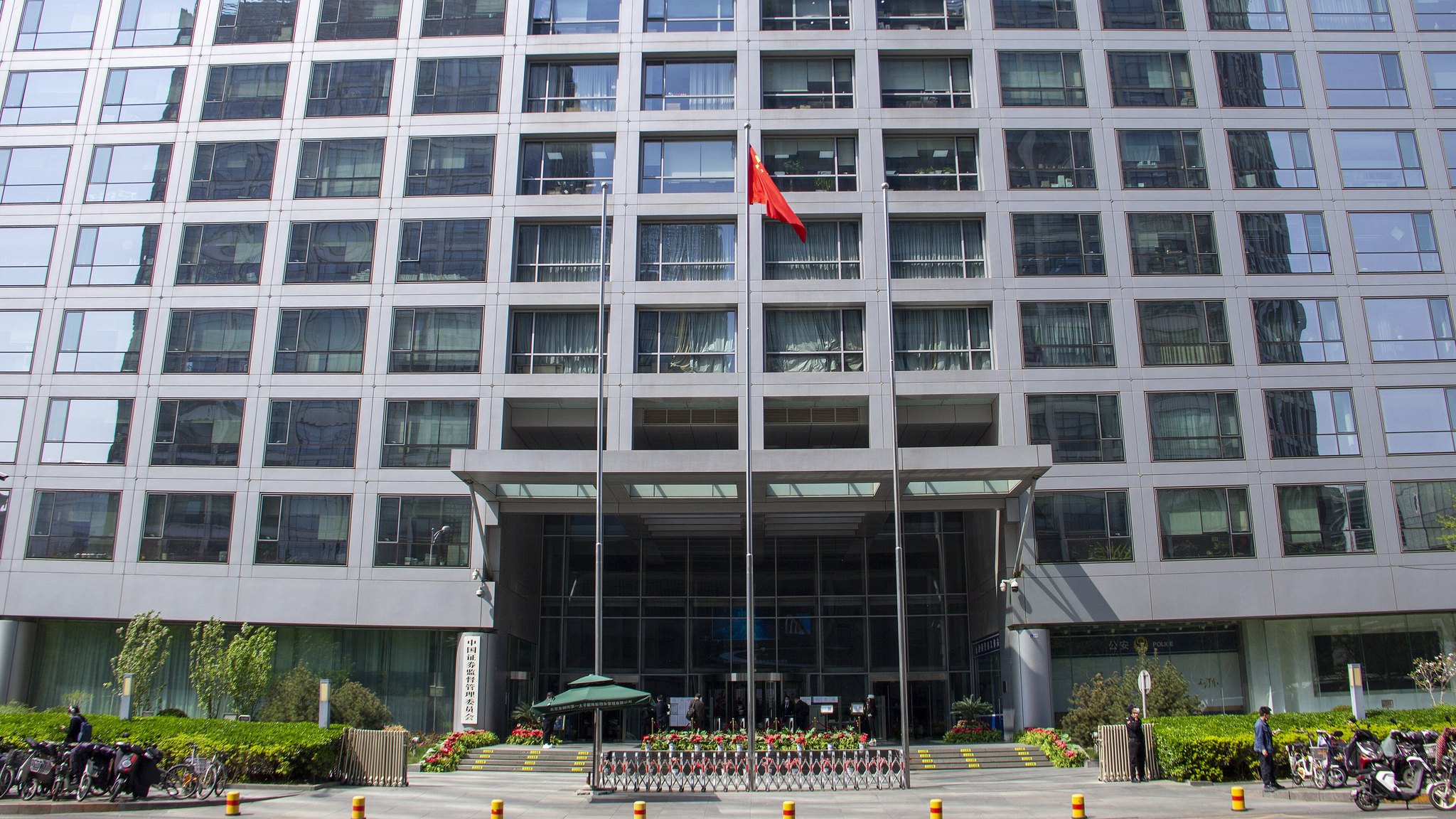
The China Securities Regulatory Commission (CSRC) on 23 October published draft rules for private fund-of-funds, the vehicles that pool money into other private funds. The 23-article draft, the Provisions on the Administration of Private Investment Funds of Funds, fills a gap left by the State Council’s 2023 regulation on private funds, which exempted fund-of-funds from the one-layer limit on nesting but left the CSRC to define which funds qualify. The CSRC’s answer is a set of hard concentration limits, mandatory custody and look-through disclosure, with an exemption that lets social security, pension and insurance money set its own limits. The design steers long-term institutional capital into private equity and venture funds through managers the CSRC can supervise. Comments close on 23 November 2026. The documents are in Chinese; quotations below are RegMemo’s translations.
A fund-of-funds must hold at least 80% in other private funds
Under the draft text, a fund-of-funds must invest at least 80% of its net assets in units of other private funds. The name must include the words for “fund of funds”, and a company or partnership structure must state the activity in its business scope. The draft sorts these vehicles into four types: securities fund-of-funds, private equity fund-of-funds, venture capital fund-of-funds (where at least 80% goes into venture funds) and a composite type that mixes securities and equity funds.
The classification determines the investment scope after look-through. A securities fund-of-funds must, once the underlying holdings are traced, stay within what a private securities fund may hold, and the same applies on the equity side. The point is to stop a fund-of-funds from becoming a route around the asset limits that apply to its underlying funds.
Four concentration limits apply to every fund-of-funds
Article 4 sets the limits. A single fund-of-funds may not put more than 25% of its net assets into one private fund. Its look-through exposure to any single underlying project or asset is capped at 20% of net assets, falling to 10% for a fund-of-funds with RMB10 billion or more in assets. No more than 30% may go to funds run by managers under the same actual controller. A manager’s fund-of-funds combined may not own more than 30% of any one investee fund, or 50% if that investee is a venture capital fund.
If a breach arises for reasons outside the manager’s control, the manager has one month after the illiquid asset becomes saleable to fix it. Funds set up to buy existing fund interests, known in China as S funds, can be excused from the 30% ownership cap with a special risk warning and approval by all investors or through the decision process set in the fund contract.
The largest carve-out is in Article 17. Where social security funds, basic pension and annuity funds, insurance money, qualified foreign investors and national-level government investment funds together contribute at least 80% of a fund-of-funds, the investors can waive the four limits, by unanimous consent or the contract’s decision process, and set their own ratios in the fund contract. Article 17 also states that the CSRC “encourages long-term capital” to invest through these vehicles. For an insurer building a dedicated programme with one manager, the 25% single-fund cap would no longer bind.
Composite managers face a RMB20 million capital floor
Managers of securities fund-of-funds and private equity fund-of-funds must be registered with the Asset Management Association of China (AMAC) for the relevant fund type and employ at least one full-time investment professional with five years of relevant experience, which the draft defines to include pension funds, insurance money and fund-of-funds. The composite type carries a much higher bar. Its main shareholders or controllers need five years of experience managing both securities and equity assets. Over the past three years, the manager must have averaged at least RMB1 billion in securities or venture fund-of-funds, or RMB2 billion in private equity fund-of-funds. It needs two investment staff with eight years’ experience and at least RMB20 million in operating funds. Each composite fund must raise at least RMB30 million in paid-in capital.
The CSRC’s drafting note says composite managers face higher compliance, professional and risk-control requirements because they can invest across both securities and equity funds, and that the provisions leave room for this business to develop in stages. The thresholds limit the composite type to managers that already run large fund-of-funds books.
Managers may not hand off investment decisions
The drafting note says the CSRC wants to stop fund-of-funds from becoming pass-through channels. Managers may not delegate the choice of investee funds or the issuing of investment instructions to anyone else in any form. The fund-of-funds and every fund it invests in must be held by a custodian, and if an investee manager refuses to cooperate with the custodian, the fund-of-funds may not invest. Investment staff on a fund-of-funds may not also manage the same firm’s other private funds.
Investments in funds run by the manager or its affiliates need dedicated disclosure of selection criteria, amounts and all fees, with a prominent risk warning. Managers must also disclose fees and performance pay at both layers and the full investment path. Article 18 adds a negative list, barring investment in managers with unstable controllers or core teams over the past three years and in funds whose underlying assets are unclear.
Breaches map to penalty articles in the 2023 regulation, and serious cases can lead to market bans. Asset management plans run by securities and futures firms fall outside the rules.
What to watch
- Comment period closes 23 November 2026
- AMAC guidance on converting existing private funds that meet the definition, which the drafting note says the CSRC will direct
- The effective date, left blank in the draft
- Whether the final text keeps the Article 17 waiver for long-term capital unchanged
Primary sources
- CSRC, CSRC seeks public comment on the draft Provisions on the Administration of Private Investment Funds of Funds (Chinese), 23 October 2026
- CSRC, Notice on public consultation, with draft text and drafting explanation (Chinese), 23 October 2026
Photo (cropped): 維基小霸王, CC BY-SA 4.0 via Wikimedia Commons
