
People’s Bank of China Governor Pan Gongsheng used his keynote at the 2026 Financial Street Forum in Beijing on 19 October to announce a set of measures, led by a new liquidity support tool for asset managers facing large redemptions. The speech, published in Chinese on the PBOC website, also said the central bank will study moving its main open market operation from seven days to overnight, push lenders away from a single loan benchmark, and remove the old benchmark deposit and lending rates from their last remaining uses. RegMemo’s summary below is based on its own translation of the Chinese text; RegMemo did not find an English version on the PBOC site.
A backstop for bond market redemption spirals
The headline measure is a liquidity support tool, to be set up with the National Financial Regulatory Administration and the China Securities Regulatory Commission, for non-bank institutions facing large redemptions. Pan described it as a bond market stabilisation mechanism and a new macroprudential tool for the PBOC.
According to the speech, the tool would be activated only in specific scenarios: when asset managers face collective liquidity stress and the bond market enters a negative loop of redemptions and forced selling. Institutions using it must meet macroprudential requirements and pledge high-grade collateral, which Pan said is meant to avoid distorting market prices or creating an illusion of a guarantee. Eligible users would be bank wealth management subsidiaries, mutual fund managers, and their parent banks and securities firms. Operational details will appear in PBOC open market operation announcements.
The conditions are the point. Wealth management products and bond funds let investors redeem at short notice while holding bonds that may be hard to sell in a stressed market, which is the loop Pan describes. The tool gives the PBOC a defined, conditional route to lend into that loop, and the collateral and macroprudential tests are there to stop asset managers from treating it as a standing guarantee.
Foreign banks and offshore clearers get wider access
Several measures widen access for foreign-owned institutions:
- the Standing Lending Facility, mainly used by city commercial and rural lenders, will be extended to locally incorporated foreign-funded banks, with national banks under the same arrangements, giving full coverage of onshore deposit-taking institutions
- a pilot will allow eight Chinese and foreign offshore RMB clearing banks to trade on their own account in the onshore interbank FX market
- foreign RMB clearing banks will be added as eligible users of the central bank repo facility for overseas central banks set up in June
Pan also said interbank and exchange bond market connectivity is ready to launch once infrastructure operators and participants finish testing, and that the PBOC will issue guidance with ten departments, including the Ministry of Science and Technology, on financial support for international technology innovation centres in Beijing, Shanghai and the Greater Bay Area.
On digital currency, the number of e-CNY operating institutions has grown from 10 to 30, covering all systemically important banks, according to the speech.
The policy rate may move to overnight
Pan said the overnight interbank repo rate, DR001, has in practice become the PBOC’s operating target, while the main open market operation and main policy rate are still seven-day. To close that gap, the PBOC will study switching the main operation to overnight at a suitable time, with the overnight repo rate becoming the main policy rate.
He also described a shift in loan pricing away from relying on the Loan Prime Rate. Some institutions, under PBOC guidance, already use DR001 as a benchmark for floating-rate loans. Larger companies could choose DR001 or the LPR, with the LPR remaining the benchmark for small business and household loans, and DR001 could serve as a benchmark for bonds and derivatives. The PBOC will issue policy guidance. Finally, the benchmark deposit and lending rates, unchanged since October 2015, will be replaced with market rates in the limited legal settings where they are still used to calculate interest.
Exchange rate and RMB use
On the exchange rate, Pan said China has not used competitive devaluation and has no need to seek a trade advantage through a weaker currency. He cited daily global FX turnover of nearly $10 trillion in 2025, with RMB turnover above $800 billion a day and about 80% of that offshore, to argue that a central bank cannot steer the long-term exchange rate.
He said the RMB’s share of international payments is about 3–4% on SWIFT data, but roughly 6–7% once CIPS and banks’ internal settlement are counted. Plans include more clearing banks, multi-level custody in the bond market, regular offshore central bank bills, and support for an offshore market led by Hong Kong with London, Singapore and Dubai.
What to watch
- PBOC open market operation announcements setting out the redemption liquidity tool.
- The launch date for interbank and exchange bond market connectivity.
- Any timetable for an overnight policy rate and the loan pricing guidance.
- Names of the eight clearing banks in the FX pilot.
Primary sources
- People’s Bank of China, Keynote speech by Governor Pan Gongsheng at the 2026 Financial Street Forum annual conference (Chinese), 19 October 2026
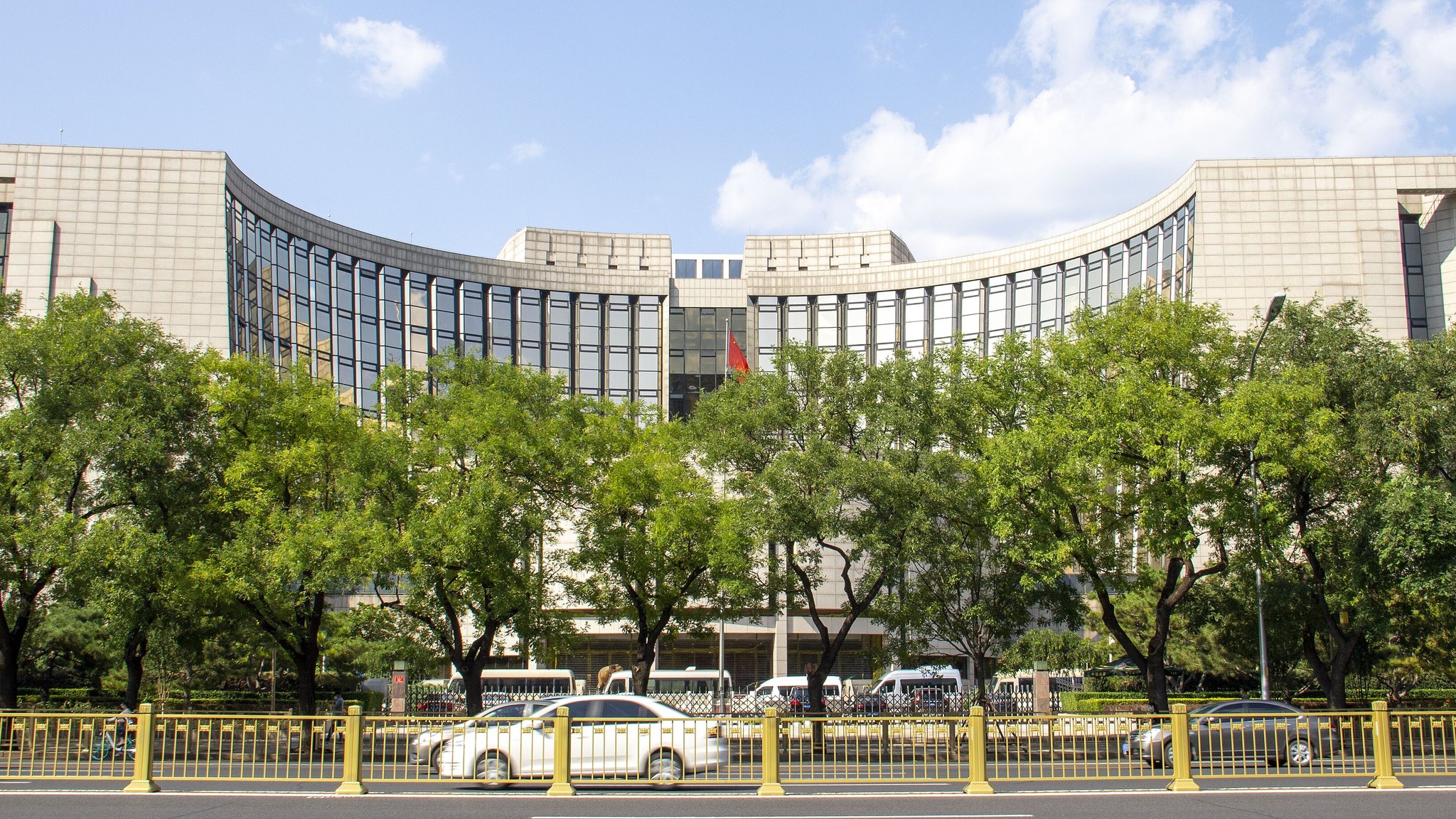
Photo (cropped): 維基小霸王, CC BY-SA 4.0 via Wikimedia Commons
