
The Federal Reserve Board on 24 September asked for comment on two proposals that would turn the GENIUS Act into a working rulebook for the payment stablecoin issuers it supervises. The headline requirement, full one-to-one backing with short-dated, liquid reserves, comes straight from the statute. The more consequential choices are the Board’s own: a capital regime that charges issuers for operational risk on every dollar of tokens outstanding, and an automatic path to liquidation for an issuer that stays below its capital minimum for two quarter-ends in a row.
The Fed will supervise only a narrow set of issuers
The proposals apply to two groups of “Board-supervised” permitted payment stablecoin issuers (PPSIs). The first is subsidiaries of insured state member banks that the Board approves to issue stablecoins. The second is state-qualified issuers that are uninsured state-chartered depository institutions and reach $10 billion or more in outstanding payment stablecoins, the point at which the GENIUS Act moves them into the federal framework. The Board’s staff memo, dated 3 September, sets out a waiver process for that transition and an initial examination within six months.
The second proposal sets out the application process for state member banks that want a subsidiary to issue stablecoins: a business plan, financial information and a route for appeals and hearings. The memo says the yield rules are consistent with the approach the OCC has proposed, which points to an attempt to keep the federal agencies from drifting apart on the most commercially sensitive provision.
Reserves must be short, liquid and segregated
Reserve assets must be segregated and limited to US dollar cash, Federal Reserve Bank balances, demand deposits at insured institutions, Treasuries with 93 days or less to maturity, overnight repos and reverse repos backed by Treasuries, shares of funds that hold only those assets, and tokenised versions of some of them. Issuers must diversify so that uninsured deposits at one bank, or repo exposure to one counterparty, cannot sink the one-to-one requirement under stress.
Redemption must be completed within two business days unless a safe harbour applies. The Board keeps discretion to extend that period where an issuer faces a threat to its safety and soundness or poses a threat to financial stability. That clause is the one to watch in a run: it lets the supervisor slow redemptions for a single issuer, and holders of a Fed-supervised coin should price that possibility in.
Capital charges scale with tokens outstanding
The capital proposal has two parts. Reserve assets held as uninsured deposits or undercollateralised reverse repos carry a 2% capital requirement, with a look-through for the same exposures inside eligible funds. The operational risk charge is graduated: 2.0% of the first $20 billion of stablecoins outstanding, 1.5% of the next $30 billion and 1.0% above $50 billion, plus 25% of the three-year average of non-reserve revenue, adjusted by a loss scalar that rises or falls with realised operational losses.
On those numbers, an issuer with $60 billion in circulation would hold $950 million against issuance and reserve management alone ($400 million on the first tier, $450 million on the second and $100 million on the third), before any revenue-based charge. That is a material cost for a business whose reserve income is capped by short-dated Treasury yields and which cannot pay holders interest.
If noncompliance with capital requirements persists as of the end of the next quarter, the proposal would require the Board-supervised PPSI to liquidate all of its reserve assets and redeem outstanding payment stablecoins.
Federal Reserve Board staff memo, 3 September 2026
Parent banks also take a hit. A Board-regulated parent that consolidates the issuer must deconsolidate it and deduct the issuer’s total minimum capital from its own common equity tier 1. A bank cannot count the issuer’s capital twice, and the deduction makes a stablecoin subsidiary a direct charge on group CET1.
Yield and tying rules reach past the Fed’s own perimeter
The proposal implements the statutory ban on paying interest or yield for holding a payment stablecoin and presumes that certain third-party arrangements are prohibited yield payments. The anti-tying rule goes further, covering all PPSIs, including those the Fed does not supervise. Distribution partnerships that pass reserve income through to users would need to be rebuilt for any issuer in scope.
The Board also proposes backstop enforcement powers over state-qualified issuers in “unusual and exigent circumstances”, with 48 hours’ written notice to the state regulator, and says it will act on anti-money laundering deficiencies only where they are “significant or systemic”. The Fed is reserving force for real failures and leaving routine supervision of smaller issuers to the states.
What to watch
- Comment period: 60 days after publication in the Federal Register.
- GENIUS Act effective date: the earlier of 18 January 2027 or 120 days after the primary federal regulators issue final regulations.
- Whether the OCC and FDIC final rules match the Fed’s yield presumption and capital approach.
- The first transition of a state-qualified issuer that crosses $10 billion in outstanding stablecoins.
Primary sources
- Federal Reserve Board, Press release: Board requests comment on two proposals under the GENIUS Act, 24 September 2026
- Federal Reserve Board, Staff memo on implementing the Board’s responsibilities under the GENIUS Act, 3 September 2026
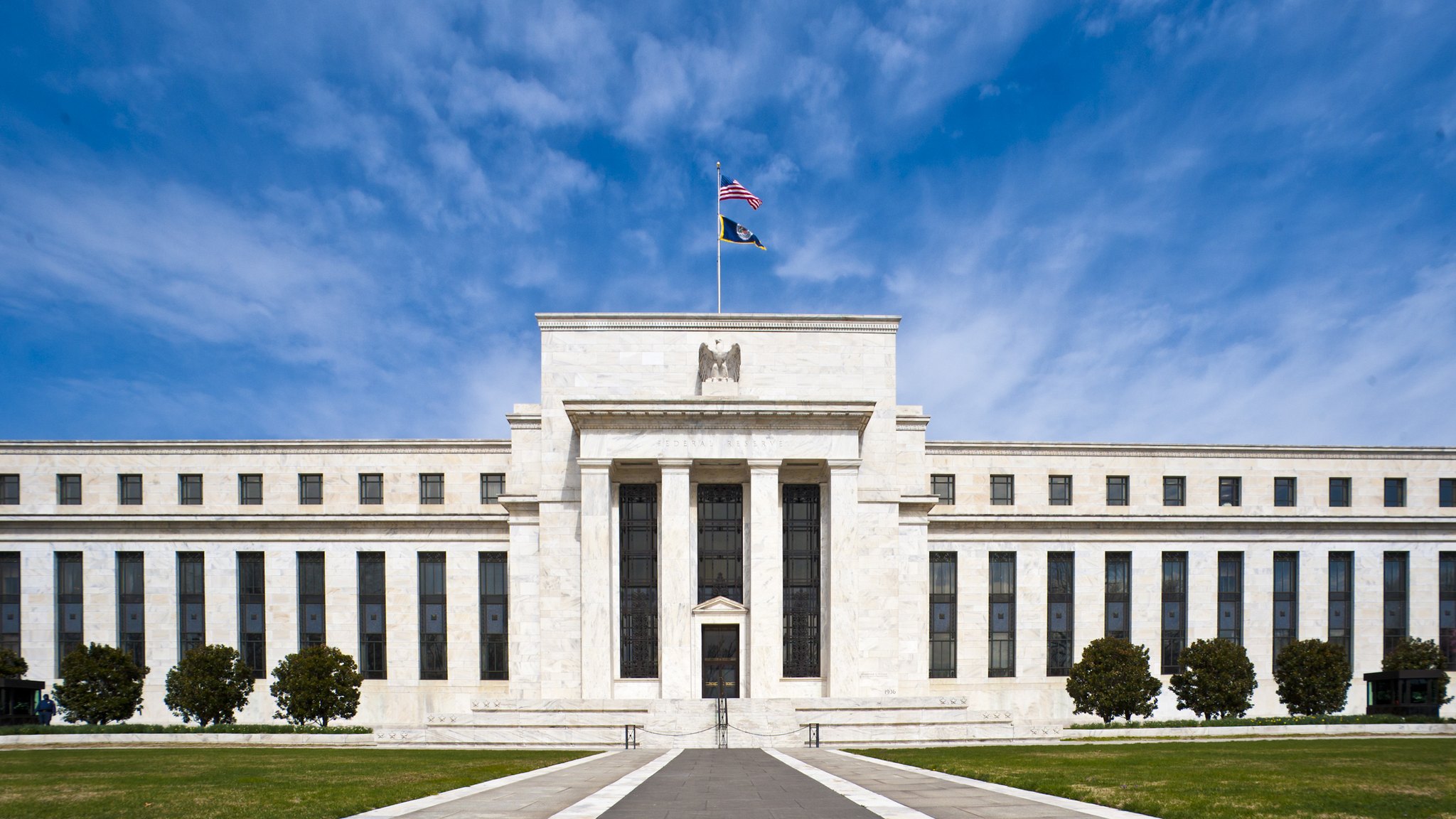
Photo (cropped): Federalreserve, Public domain via Wikimedia Commons
