
The Hong Kong Monetary Authority (HKMA) said on 2 November that EnsembleTX, the pilot phase of Project Ensemble, now settles interbank tokenised deposit transactions in tokenised central bank money (CeBM) on a 24/7 basis. Participation has grown to 12 banks and 20 other firms. When the pilot opened in November 2025, interbank settlement ran through the HKD Real Time Gross Settlement (RTGS) system. In RegMemo’s analysis, the change closes the gap between round-the-clock trading of tokenised funds and settlement that still depended on RTGS hours, and the HKMA has not yet published the operating rules that banks will need to price the service.
What changed on 2 November
EnsembleTX moves tokenised deposits between participating banks. A corporate treasurer or a fund investor pays with a bank’s tokenised deposit, and the two banks involved then settle the obligation between themselves. Until this month that interbank leg ran over HKD RTGS. It now runs in tokenised CeBM, a claim on the HKMA, at any hour.
The HKMA planned the step from the start. Its November 2025 release said EnsembleTX would operate throughout 2026, use RTGS first, and be “progressively upgraded and enhanced to support settlement in tokenised Central Bank Money (CeBM) on a 24/7 basis.” The upgrade arrived just under a year after launch.
The 2 November release describes the result and says little about mechanics. It does not say how banks move liquidity between RTGS accounts and tokenised CeBM, whether the HKMA provides intraday or overnight liquidity in the tokenised form, or whether balances are capped. Those terms decide how much a bank must pre-fund to settle at 3 a.m. on a Sunday.
Mainland-owned banks hold most of the bank places
The annex lists five tokenised deposit banks added in 2026: Bank of Communications (Hong Kong), China CITIC Bank International, ICBC (Asia), the Hong Kong branch of Industrial Bank and Nanyang Commercial Bank. They join the seven from 2025: Bank of China (Hong Kong), China Construction Bank (Asia), Fubon Bank (Hong Kong), Fusion Bank, Standard Chartered Bank (Hong Kong), The Bank of East Asia and HSBC.
Seven firms joined as other industry pioneers in 2026: CMU OmniClear, CNPC Finance (HK), EX.IO, Finloop, HashKey Group, JINGDONG Technology and Panthertrade. CNPC Finance is the treasury arm of a state energy group, and JINGDONG Technology belongs to the JD.com group. HashKey runs a licensed virtual asset trading platform in Hong Kong. The 2025 group of 13 includes BlackRock, Franklin Templeton, Ant International, China Asset Management (Hong Kong) and Hong Kong Exchanges and Clearing.
Seven of the 12 tokenised deposit banks are owned by mainland Chinese groups. The pioneer list points to where the HKMA expects early volume, in corporate treasury flows from mainland groups and in tokenised fund subscriptions and redemptions.
Why 24/7 settlement in central bank money is needed
On 26 October the SFC allowed round-the-clock secondary trading of two ChinaAMC tokenised money market funds on a licensed virtual asset trading platform. A trade at night could be paid for in a bank’s tokenised deposit, but the interbank leg between the buyer’s and seller’s banks then waited for RTGS to open, and until it did each bank carried an exposure to the other.
SFC chief executive Julia Leung linked the two directly.
Tokenised deposits can now power around-the-clock transactions, including corporate treasury management and secondary trading of tokenised funds on licensed platforms.
Julia Leung, SFC, 2 November 2026
The SFC said in its FinTech Week synopsis that it had authorised 17 tokenised retail products by September 2026, with assets under management of US$1.3 billion, up 34% in 12 months. That is a small base for a 24/7 central bank settlement layer, and the HKMA is building ahead of demand.
Singapore has taken a different route. MAS’s BLOOM initiative, launched in October 2025 and joined by Bank Negara Malaysia and the Bank of Thailand in October 2026, works on settlement in tokenised bank deposits and regulated stablecoins, with a focus on payments across borders. Hong Kong has started by putting the HKMA’s own balance sheet at the interbank layer.
Eddie Yue, the HKMA’s chief executive, said the HKMA expects the commercialisation of tokenised deposits and digital assets to gain momentum. He gave no volume figures for EnsembleTX, and the release has none.
What to watch
- HKMA publication of operating terms for tokenised CeBM, covering liquidity provision, any balance limits and the link to HKD RTGS.
- The end of the EnsembleTX pilot, which the HKMA said would run throughout 2026, and any decision on a production service.
- SFC approvals for further tokenised funds traded around the clock on licensed platforms.
- New tokenised deposit banks joining from outside the mainland and local bank groups.
Primary sources
- HKMA, HKMA advances Project Ensemble pilot phase to 24/7 settlement in tokenised Central Bank Money, 2 November 2026
- HKMA, Annex A and Annex B: EnsembleTX participants, 2 November 2026
- HKMA, HKMA announces the new phase of Project Ensemble to support real-value transactions in tokenised deposits and digital assets, 13 November 2025
- SFC, Galvanising Responsible Innovation for Capital Markets through AI and Tokenisation, 2 November 2026
Related: Hong Kong opens round-the-clock secondary trading in two tokenised money market funds
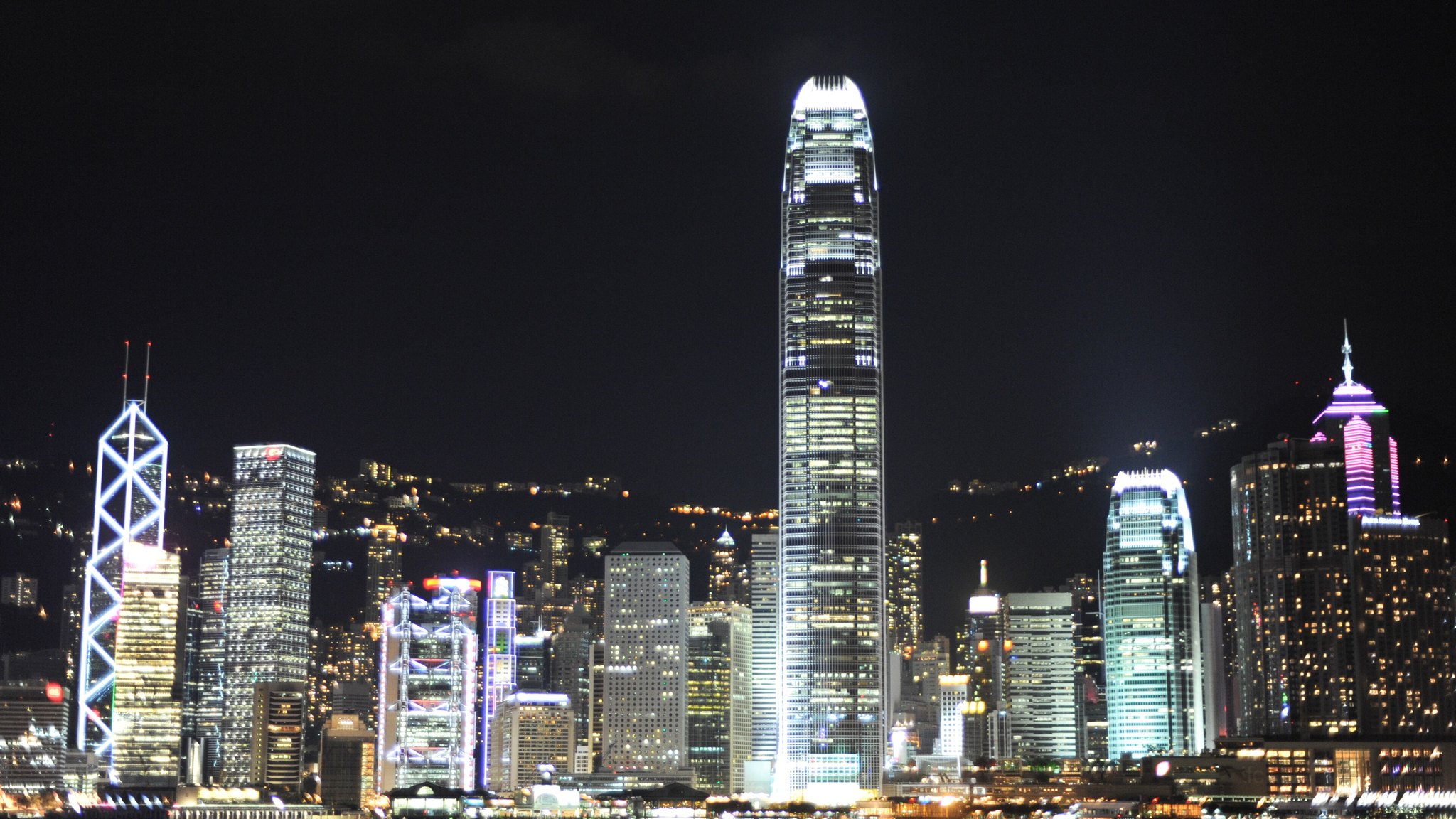
Photo (cropped): Mstyslav Chernov, CC BY-SA 3.0 via Wikimedia Commons
