
The Securities and Futures Commission (SFC) on 26 October approved secondary trading of two SFC-authorised tokenised money market funds on a licensed virtual asset trading platform (VATP), and trading began the same day. The funds are the ChinaAMC HKD Digital Money Market Fund and the ChinaAMC USD Digital Money Market Fund. The SFC calls it the world’s first secondary trading of tokenised public funds. The approval moves Hong Kong’s tokenised fund rules out of the circular stage and into a live market, and the conditions attached to it show where the regulator sees the risk: a price on a crypto exchange at 3 a.m. on a Sunday that has drifted away from the fund’s net asset value.
Retail investors can now sell fund tokens outside dealing hours
Until now, an investor in a tokenised fund in Hong Kong dealt only with the fund. Subscriptions and redemptions ran through distributors at the next calculated net asset value (NAV), within normal dealing windows that the SFC describes as typically Monday to Friday. The token was a new wrapper on an old process.
Secondary trading changes the exit. A holder can now sell the token to another investor on the VATP’s order book at any hour, and the buyer pays whatever the market sets. The SFC press release says investors could sell tokenised assets around the clock and “transfer their trading proceeds instantly” to other uses. That is the commercial case for tokenising a money market fund.
The first products carry little asset risk: a money market fund holds short-dated deposits and debt, and its NAV moves little from day to day. The SFC says it will watch trading in these funds and “consider broadening the product scope over time.” Any later product with a more volatile NAV will test the same rules much harder.
The April circular sets price alerts, market makers and a route back to NAV
The rules come from a circular issued on 20 April 2026, which built on the 2023 tokenisation circulars and on the SFC’s rulebook for exchange-traded funds and VATPs. Trading must use the platform’s on-screen auto-matching, and a trade executes only if the client’s account is fully funded, so clients cannot trade on credit or sell tokens they do not hold.
Fair pricing carries most of the weight. Platforms must show investors a Price Deviation Alert when an order would execute at a price that deviates from the fund’s indicative NAV by more than a set threshold. They must publish a real-time or near real-time indicative NAV, typically updated at least every 15 seconds during trading hours, along with the last official NAV. Investors must also be told they can subscribe or redeem at NAV through the primary market instead, with the caveat that primary dealing follows normal windows and forward pricing. Platforms must run trading bands, cooling-off periods and pre-trade and post-trade surveillance against manipulation. Brokers that connect clients to the platform must display the same alert on their own screens.
Liquidity provision falls on the fund manager. Product providers must use “best endeavours” to have at least one market maker per fund, and that market maker must give at least three months’ notice before it stops. Platforms must monitor market makers against agreed bid-ask spreads, quote sizes and participation rates. Managers must also make tokens move between markets, so that a token created in the primary market can be sold on the platform and a token bought on the platform can be redeemed with the fund.
Secondary trading of tokenised money market funds marks an important milestone in the SFC’s ongoing effort in advancing Hong Kong’s digital asset development.
Elisa Ng, Executive Director of Investment Products, SFC, 26 October 2026
Disclosure has to cover weekend discounts and platform fragmentation
The circular requires the fund’s summary disclosure document to describe liquidity and price deviation risk, including “potentially very thin trading and large premium/discount to NAV,” particularly outside Hong Kong market hours and at weekends. It must also cover price fragmentation, where the same fund trades at different prices on different channels, and reliance on market makers. The offering documents must list the market makers, flag any that are affiliates of the fund manager and disclose any incentive schemes paid to them.
Platforms and brokers must then obtain each client’s confirmation that they understand these risks before allowing secondary trading. That is a heavier onboarding step than buying fund units through a bank app, and it puts the burden of explaining NAV discounts on the platform.
The approval process is also product by product. Existing SFC-authorised funds need prior consultation and approval to add secondary trading, and any material change to the trading arrangement, such as a new trading channel or a different alert threshold, goes back to the SFC.
Settlement in tokenised deposits is the next step the SFC names
The press release links the funds to Project Ensemble, the tokenisation work the SFC co-leads with the Hong Kong Monetary Authority (HKMA). It says tokenised funds could use the tokenised deposit capabilities built under Ensemble for “more efficient trade settlement and asset mobility.” Today, a sale on a VATP still settles against the cash the client has pre-funded on the platform. Settling against tokenised bank deposits on the same rails would let proceeds leave the platform at any hour as bank money.
For fund managers, the economics turn on market making. A tokenised money market fund with a thin order book and a single market maker will trade at a discount whenever that market maker steps back, and the rules make the manager responsible for finding a replacement. For VATPs, listing regulated funds adds a product line that sits under the SFC’s investment products regime as well as the platform licence.
What to watch
- Trading data on the two ChinaAMC funds, especially spreads and NAV deviations at weekends
- Applications from other managers to add secondary trading to existing tokenised funds
- Any SFC move to extend secondary trading beyond money market funds
- Project Ensemble work on settling tokenised fund trades in tokenised deposits
Primary sources
- SFC, SFC approves first-ever secondary trading of tokenised public funds, 26 October 2026
- SFC, Circular on secondary trading of tokenised SFC-authorised investment products, 20 April 2026
Related: SFC freezes up to HK$4.66bn and suspends Baicha shares over suspected IPO rigging
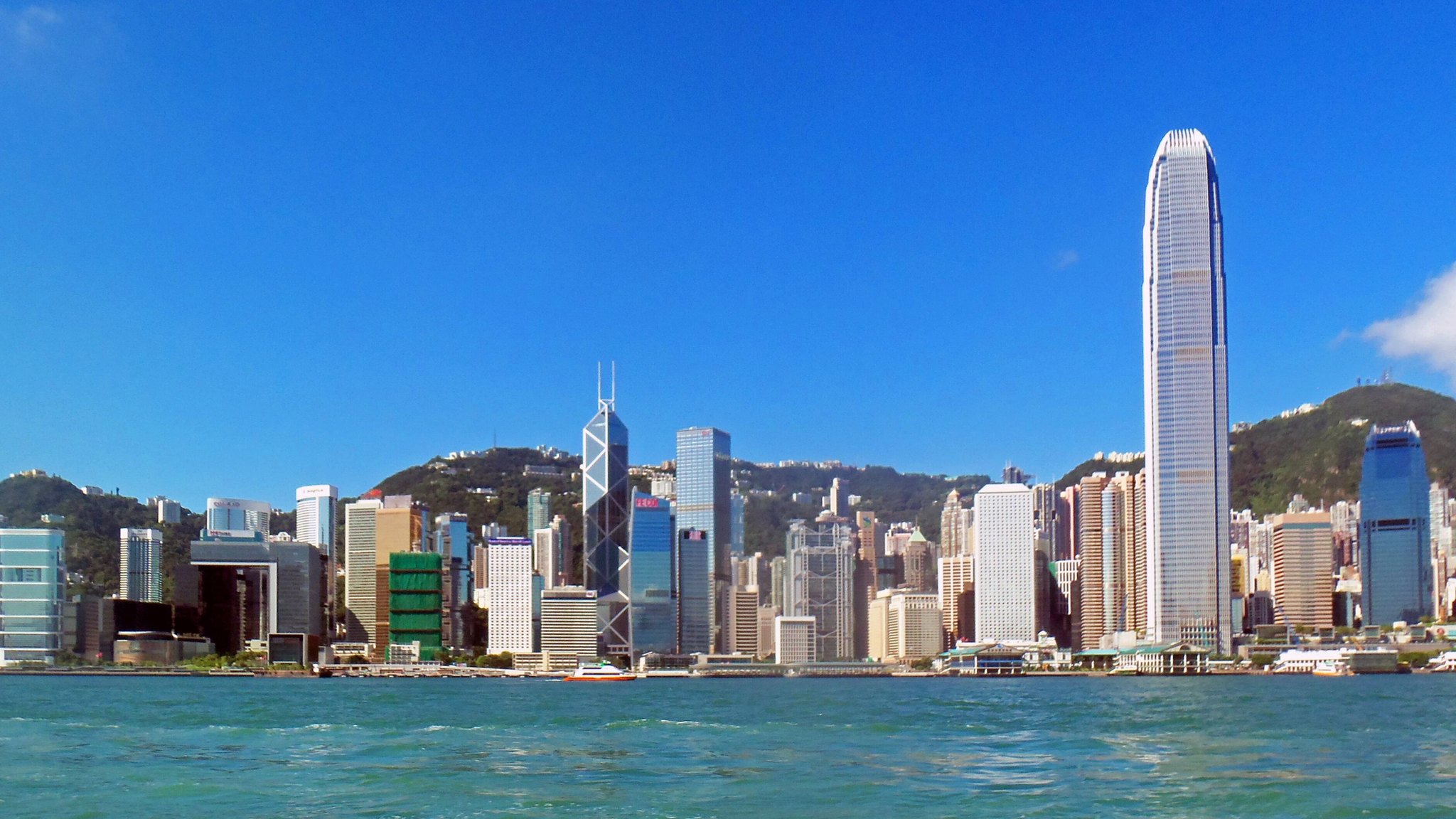
Photo (cropped): Daniel Case, CC BY-SA 3.0 via Wikimedia Commons
