
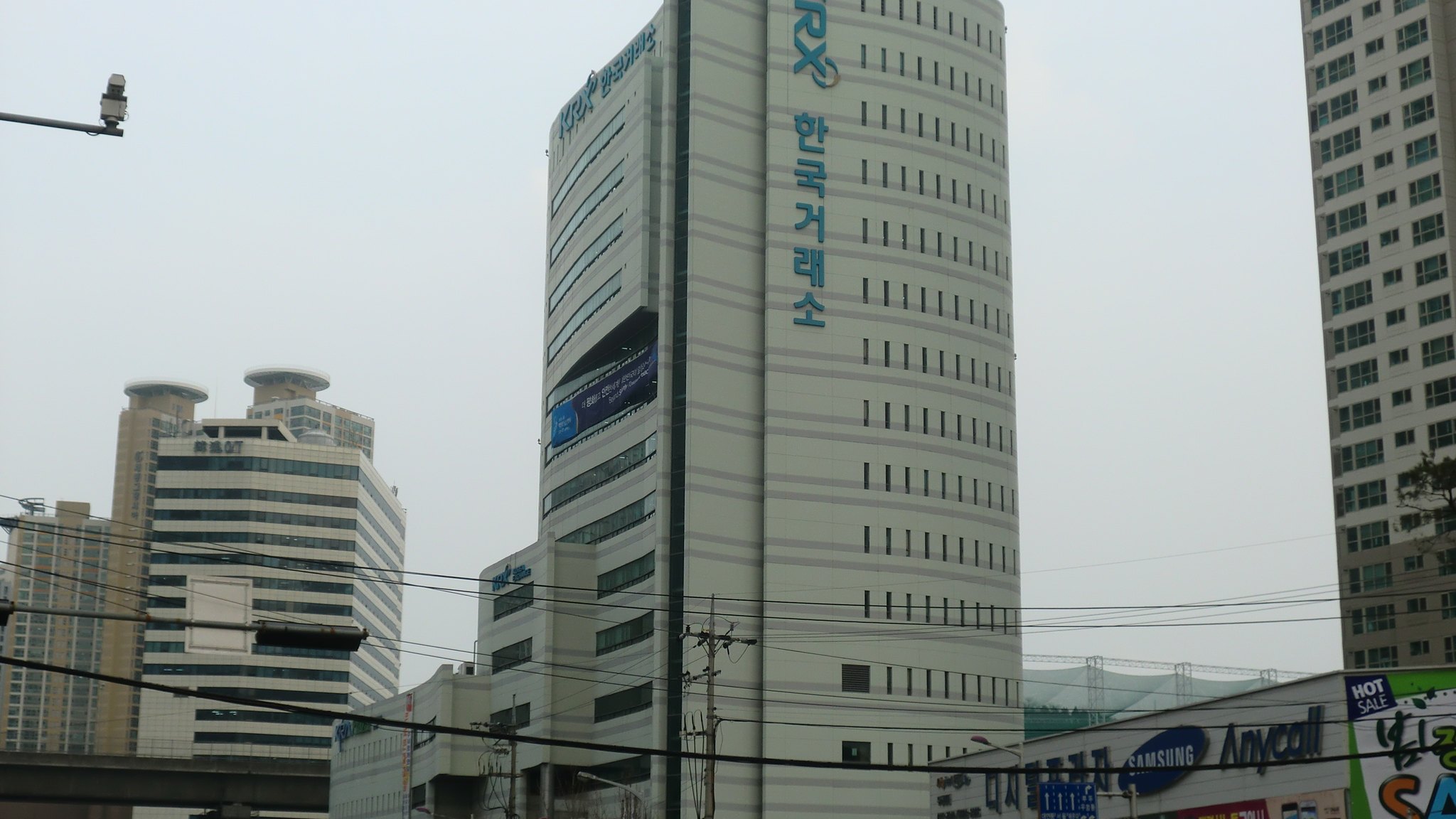
Korea’s Financial Services Commission (FSC) on 23 November 2026 eased the daily limit on buy orders that listed companies can place when they repurchase their own shares, for three months from 24 November 2026 to 23 February 2027. The decision followed an emergency market situation review meeting held by the government on 22 November, which the FSC says took place as Korean shares turned more volatile on concerns about the global artificial intelligence and semiconductor industries and on the chance of higher US interest rates. It is the second temporary measure in three weeks, after the 9 November waiver of the 140 percent collateral rule for margin loans. In RegMemo’s analysis, the change lets a company with an approved buyback put its full demand into the market on the worst day of a sell-off, and that is the situation a stabilisation measure of this kind is designed for.
From a volume formula to the full programme
The FSC’s one-page release sets out the old and new limits in a table. For direct acquisitions, a company could until now place daily buy orders up to the smaller of two amounts. The first is the larger of 10 percent of the shares it plans to acquire and 25 percent of the stock’s daily trading volume over the month before the board resolution. The second is 1 percent of total shares issued. Under the temporary rule, the daily limit becomes the total number of shares the company has resolved to acquire.
For indirect buybacks through a trust contract with a securities firm, the cap moves from 1 percent of total shares issued to the full value of assets placed in the trust.
A worked example shows the size of the change. Take a company with 100 million shares in issue, a board-approved buyback of 5 million shares and average daily trading of 1 million shares in the prior month. Under the old formula, the first amount is 500,000 shares (the larger of 500,000 and 250,000) and the second is 1 million, so the daily cap is 500,000 and the programme takes at least 10 trading days. Under the temporary rule, the company could in principle buy all 5 million shares in one session. For thinly traded stocks, where 10 percent of the programme exceeds a quarter of daily volume, the difference is larger.
A second step in a prepared contingency plan
The FSC presents the change as part of “market stabilization measures in accordance with the previously prepared contingency plan.” The government used the same pairing in 2022. As RegMemo reported on 9 November, the FSC eased the margin collateral rule and the buyback order cap together in July 2022, and extended both in September of that year. With the margin waiver already in place, the 2026 sequence now follows the same order, and both measures run until late February 2027.
The release does not name further steps. The FSC’s December 2025 market monitoring release, linked from the same page, concerned the continued operation of its market stabilisation programmes, which the FSC decided at the time to keep running.
What it changes for issuers, brokers and investors
For listed companies, the rule removes a mechanical brake on execution. Boards that have already approved a buyback can ask their broker or trust manager to accelerate it, and companies weighing a new programme can plan around concentrated buying in a short window. The release changes only the quantity limit, so the other conditions on buyback orders, including disclosure of the board resolution and rules on order timing and price, appear to stay in place. Companies and their brokers will still need to manage the market impact of very large orders and the risk that heavy buying close to other disclosures draws questions from the Financial Supervisory Service.
For securities firms running trust-based buybacks, the cap now depends on the money a client places in the trust, so a large trust mandate can be executed much faster. Investors who sell into a falling market may find more corporate demand on the bid, though the measure does not oblige any company to buy.
In the United States, Rule 10b-18 under the Securities Exchange Act gives issuers a safe harbour from manipulation claims when, among other conditions, daily purchases stay within 25 percent of average daily trading volume, which is close to Korea’s normal formula. Korea’s temporary rule removes the volume test for three months, a larger step than a safe harbour, because the old limit was a binding rule.
What to watch
- 24 November 2026: the eased limit takes effect for listed companies’ direct and trust-based buybacks.
- Board resolutions on new or enlarged buyback programmes filed in the coming weeks.
- Any further FSC or government measures if volatility widens, and any decision to extend the margin and buyback measures.
- 23 February 2027: scheduled expiry of the eased buyback limit.
Primary sources
- Financial Services Commission, FSC Eases Rule on Daily Buying Order Limit on Treasury Stock Buyback of Listed Companies for Three Months, 23 November 2026
- Financial Services Commission, Press release (PDF) with the old and new order limits, 23 November 2026
Related: Korea suspends 140% margin-loan collateral rule for three months to curb forced selling
Photo (cropped): hyolee2, CC BY-SA 3.0 via Wikimedia Commons
