
The Monetary Authority of Singapore (MAS) on 18 November 2026 issued its Guide on the Tokenisation of Bank Deposits, the first MAS document to set out when a digital token issued by a bank counts as a deposit under the Banking Act 1970. On the same day it revised its Guidelines on Definition of a “Deposit”, first issued in October 2004, so that they point banks to the new guide. The test MAS applies is a legal one. A token is a tokenised deposit only if the holder’s right to repayment comes from a deposit account with the bank. In RegMemo’s analysis, that test shuts out bank-issued bearer tokens in Singapore, so banks that want tokens to move between institutions will need a separate interbank settlement leg or the stablecoin regime MAS says it is building.
Three tests decide whether a bank token is a deposit
MAS says the existing definitions of “deposit” and “deposit liabilities” in the Banking Act, and the factors in the deposit guidelines, apply to tokenised arrangements without change. Treatment turns on the legal and economic substance of an arrangement, including the rights and obligations of the parties. Tokenisation, in MAS’s words, does not “in and of itself, determine or alter the legal or economic nature of a product.” Where a token is a deposit, deposit insurance, insolvency and resolution treatment follow from that.
The guide calls the account-based nature of deposits “a fundamental characteristic that should be preserved in tokenised deposits.” MAS will look at three features. The first is whether the depositor’s right to repayment arises from the terms governing the deposit account and not solely from possession or control of the token. The second is whether the bank keeps an ongoing account relationship with the depositor and can tell at any time who the depositor is and how much it owes. The third is whether transfers between depositors can happen only with the bank’s consent, which the bank can give by executing each transfer or in advance under agreed arrangements.
Bearer tokens fall outside, so cross-bank payments need a separate settlement leg
MAS does not expect bearer instruments, meaning tokens where the right to repayment arises solely from possession or control, to be tokenised deposits, because they lack the account-based features above. Tokenised deposits can still support cross-bank transfers, MAS says, but the transfer would run on a separate interbank settlement arrangement, while each bank’s tokens stay account-based inside the issuing bank.
MAS’s own infrastructure work shows where that interbank leg could settle. On 19 November MAS announced the issuance of tokenised MAS Bills: S$100 million of four-week bills issued on 6 November directly on the MAS-operated Singapore Dollar Test Network and settled in wholesale central bank digital currency. Five primary dealers took part, DBS Bank, HSBC’s Singapore branch, OCBC, Standard Chartered Bank (Singapore) and UOB, and bids came to more than twice the issue size. The network will be renamed SG Digital Ledger.
Tokenised bank deposits, regulated stablecoins and wholesale CBDC can all play a role.
Chia Der Jiun, MAS Managing Director, keynote at the Singapore FinTech Festival, 19 November 2026
In that keynote address, Chia listed the deposit guide, a regulatory regime for stablecoins that MAS is introducing, and live wholesale CBDC settlement as three parts of one plan for digital money in Singapore.
Four worked examples show what banks can build
The appendix gives four cases. In the first, a bank issues tokens that mirror customers’ existing balances one for one, its core banking system stays the authoritative record, and the tokens confer no separate right to repayment. MAS says this may be described as tokenised deposits. In the second, a customer’s wallet on a distributed ledger is the deposit account itself, and the bank keeps its authoritative records on the ledger. That also qualifies, because repayment rights still come from the account terms.
The third case goes furthest. Customers move tokens directly to other depositors of the same bank under arrangements agreed in advance, with no approval for each transaction, and MAS treats the bank’s advance consent as enough to keep the deposits account-based. The fourth case sets a boundary: tokens a bank creates to track its own liquidity allocated to payment processing are internal records and confer no rights on customers, so they are not tokenised deposits at all.
The guide does not override legislation or approve any particular product, and MAS tells banks unsure whether an arrangement keeps the account-based features to engage it early.
Labels, disclosures and ledger records come with new expectations
Banks should not call a product a deposit in any offer or advertisement if it does not qualify under the Banking Act, and should not call tokens “tokenised deposits” when they are uncertain whether the product is a deposit. A bank that issues tokenised deposits should disclose how they differ from an ordinary deposit, covering deposit insurance and other legal protections, conditions on transfers, when transfers take effect and whether they can be reversed, how errors and unauthorised transactions are handled, which record decides a depositor’s entitlement if records conflict, what happens during a technology failure, and fees.
Where the ledger itself is the authoritative record, banks should set controls for reconciling it with other records, for correcting or amending it, and for preserving depositors’ entitlements if it becomes unavailable or unreliable. Hong Kong is working through the same questions in Project Ensemble, the HKMA’s tokenisation project, which on 16 November extended its work with Swift on cross-border interoperability.
What to watch
- Details of MAS’s stablecoin regime, which the Managing Director said MAS is introducing; no dates were given on 19 November.
- Maturity of the first tokenised MAS Bills on 4 December 2026, and live trials in 2027 with more financial institutions and wider use of tokenised MAS Bills as collateral.
- MAS’s update to its Guide on Tokenisation of Capital Markets Products, announced in the same keynote.
Primary sources
- MAS, Guide on the Tokenisation of Bank Deposits, 18 November 2026
- MAS, Guidelines on Definition of a “Deposit”, revised 18 November 2026
- MAS, MAS Announces Successful Issuance of Tokenised MAS Bills on the Singapore Dollar Test Network, 19 November 2026
- MAS, Keynote Address by Managing Director Chia Der Jiun at the Singapore FinTech Festival 2026, 19 November 2026
Related: HKMA moves EnsembleTX to 24/7 settlement in tokenised central bank money
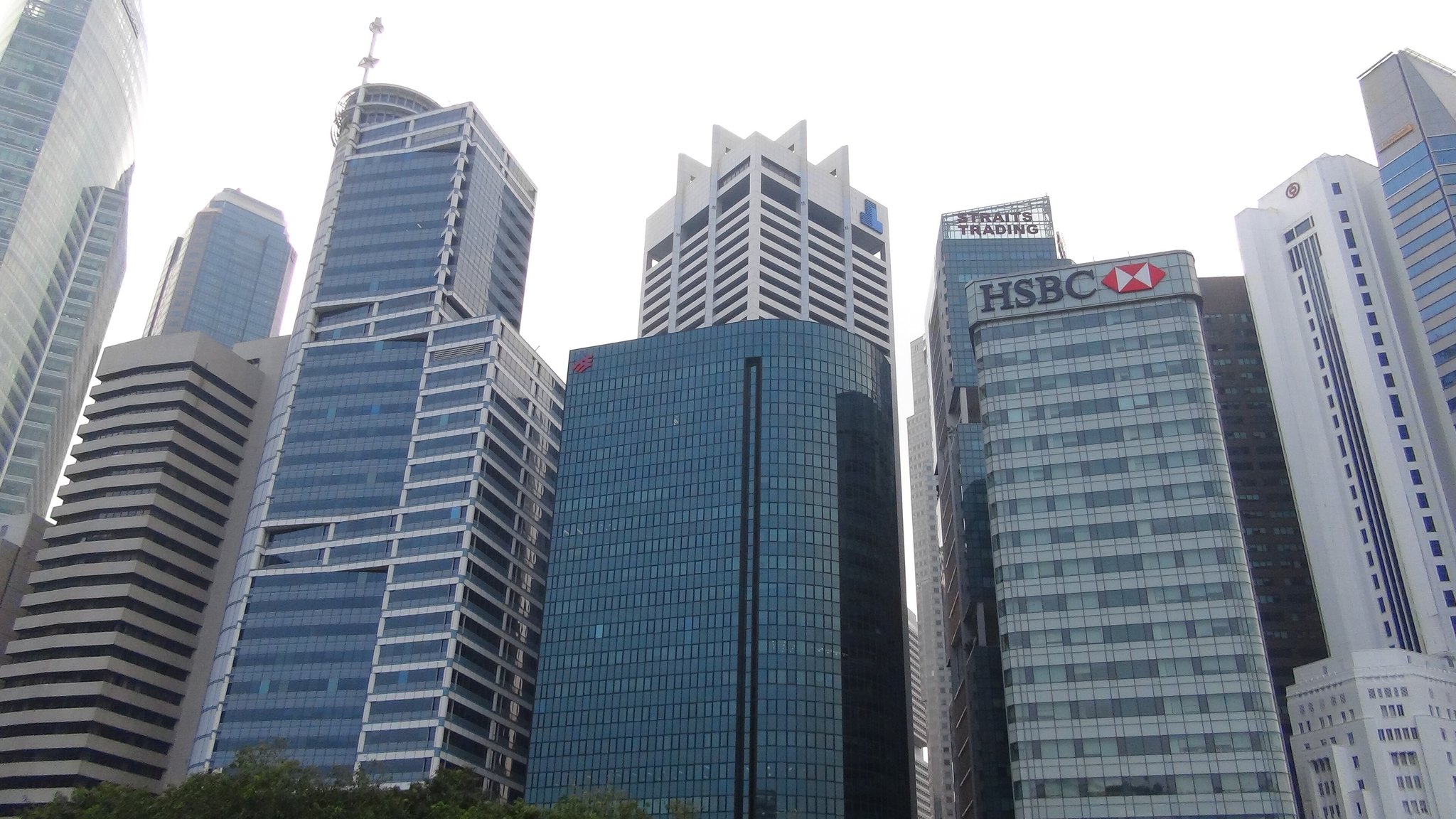
Photo: Wishds., CC BY-SA 4.0 via Wikimedia Commons
